Researchers

AIdemoc brings together experts from a wide range of disciplines to advance a shared goal: strengthening and safeguarding democracy in an increasingly AI-driven world. Learn more about our researchers:

University of Helsinki

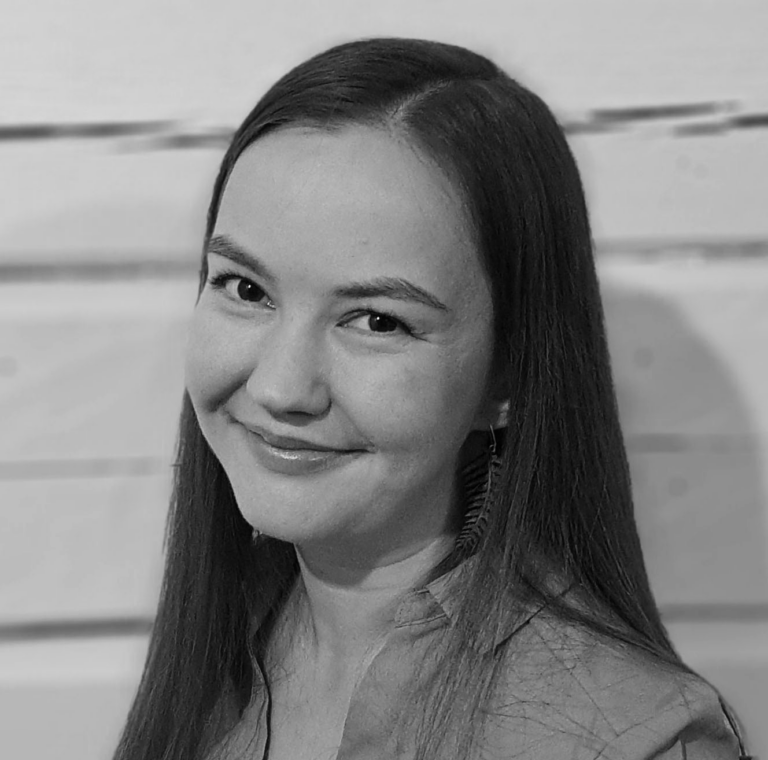
In the AIdemoc project, the University of Helsinki’s research topics are “generative AI and hallucinations,” “communication and cognition,” and “transparent and participatory synthetic speech.” The areas are led by Anna-Mari Wallenberg, who also serves as the director of the entire consortium; Riikka Möttönen, Professor of Cognitive Science; and Martti Vainio, Professor and Head of the Department of Digital Humanities.

The University of Helsinki is an international community of more than 40,000 students and staff, producing a sustainable future for the benefit of the whole world through the power of science. It ranks among the top one percent of universities in the world in international university rankings. The multidisciplinary university operates on four campuses in Helsinki and at the university centres in Lahti, Mikkeli, and Seinäjoki. It also has six research stations across Finland and one in Kenya. The university was founded in 1640.
Anna-Mari Wallenberg
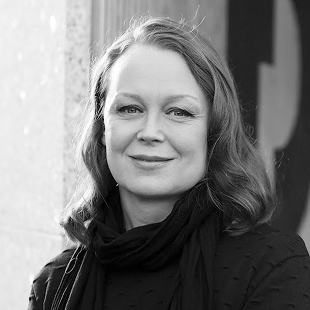
Consortium leader, Docent in Cognitive Science

Helsingin Yliopisto

Cognitive Science AI Act Algorithmization
I study the societal consequences of AI technologies from a multidisciplinary perspective. In recent years, my work has focused particularly on AI regulation and ethics, as well as on the role of cognitive factors in human–AI interaction.

anna-mari.wallenberg@helsinki.fi

Riikka Möttönen

Professor of Cognitive Science

University of Helsinki

Cognition Language Brain
I have conducted extensive research on the brain mechanisms related to cognition, speech, and language, using a wide range of neuroscience methods. My studies have explored, for example, the neural connections between speech perception and production. My research group also investigates why language learning is more challenging for adults than for children. In the AIdemoc project, we examine speech communication, focusing especially on people’s cognitive abilities to assess the reliability of information based on prosodic features of speech.

riikka.mottonen@helsinki.fi

Martti Vainio

Professor of phonetics, Dosent

University of Helsinki

Phonetics Digital humanities
I lead the Phonetics and Speech Synthesis Research Group, where we explore the relationship between language and speech technologies, the phonetic features of speech synthesis, and sound symbolism. In the AIdemoc project, our research focuses specifically on transparent, inclusive, and ethically sustainable synthetic speech.

martti.vainio@helsinki.fi

Soila Kuuluvainen

Postdoctoral Researcher, Department of Digital Humanities

University of Helsinki

AI literacy AI expertise psychometrics
In the AIdemoc project, I study AI literacy and AI competence, focusing on how to measure these two as reliably as possible. Our goal is to produce Finnish versions of existing AI literacy and competence scales. These can then be utilized in other research projects to investigate how self-perceptions of AI skills and measured competence correlate with attitudes or behavior. With a PhD in Psychology, this project allows me to leverage my expertise in psychometrics. Additionally, I conduct research on adult language learning in another Strategic Research Council (SRC) consortium, DALAI-FIN.

soila.kuuluvainen@helsinki.fi

Tommi Buder-Gröndahl

University lecturer

University of Helsinki

cognitive science linguistics AI interpretability
My research combines themes from artificial intelligence, linguistics, and philosophy. My central area of focus is AI interpretability: how can the internal workings of models be explained in a way that humans can understand? In the AIdemoc project, I also focus on the challenges posed by AI model hallucinations.

tommi.grondahl@helsinki.fi

Hanna Kukkonen

Doctoral researcher in cognitive science

University of Helsinki

Cognitive science problem solving AI literacy
My research examines the role of artificial intelligence in the problem-solving process. I study how AI affects problem-solving in expert work. I am also involved in developing a Finnish AI literacy assessment.

hanna.kukkonen@helsinki.fi

Sébastien Le Maguer

Postdoctoral researcher

University of Helsinki

evaluation of speech synthesis perception of speech synthesis
I am a postdoctoral researcher at the University of Helsinki, and I study what constitutes good speech synthesis in the broad sense of the term: how should the quality of synthesis be evaluated, and should it sound human? Does it reinforce or reduce discrimination? In the AIdemoc project, I study how speech synthesis can be made to sound artificial so that communication between AI and humans remains trustworthy without losing its efficiency.

sebastien.lemaguer@helsinki.fi

Jami Pekkanen

University lecturer

University of Helsinki

Cognitive scientist nerd skeptic

I study the suitability of large language models for use in public authorities’ customer service. My field of research is cognitive modelling, meaning that I create computer programs that process information in a human-like way. My particular strength is broad methodological expertise.

jami.pekkanen@helsinki.fi

Netta Lagus

Netta Lagus

Researcher

University of Helsinki

Eye tracking cognitive science AI literacy
In the AIdemoc project, I focus on studying people’s AI literacy. I also conduct psychophysiological research in cognitive science, and I have previously worked as a researcher for the government on security-related issues

netta.lagus@helsinki.fi

Théo Salmenkivi-Friberg

Théo Salmenkivi-Friberg

Doctoral researcher

University of Helsinki

language modelling transparency reliability hallucination
I study how factual information is preserved, changed, or lost in machines that produce and transform language. My previous experience is in machine translation and language technology. I draw on predictable and controllable methods from my earlier work to process linguistic information whose accuracy can be verified.

theo.friberg@helsinki.fi

Iikka Hauhio

Doctoral researcher

University of Helsinki

computational creativity machine translation language technology
I study the properties of AI, such as creativity, controllability, and morality. I have also conducted research on machine translation, focusing on vocabularies and constrained decoding, where I have combined rule-based language technology with language models.

iikka.hauhio@helsinki.fi

Jussi Wright

Jussi Wright

Expert

University of Helsinki

Gestures epistemic certainty digital humans cognitive science
Gestures influence how trustworthy and well-informed we perceive the information conveyed by a speaker to be. In the AIdemoc project, I study gestures related to epistemic certainty in virtual characters. I am developing a browser-based research platform that enables precise parametric control of virtual characters’ gestures in experimental studies.

jussi.wright@helsinki.fi

University of Vaasa

In the AIDEMOC project, Vaasa examines possible futures of digital democracy, the sociotechnical transformation accelerated by artificial intelligence, and frameworks for the ethically sustainable use of AI as part of responsible and inclusive governance. The project is led by Docent and Principal Scientist Nina Wessberg. The University of Vaasa is a Finnish university located in Vaasa. The University of Vaasa is a multidisciplinary university with approximately 7,000 students and 715 staff members. For research and teaching, the University of Vaasa has four academic units: Management; Accounting and Finance; Marketing and Communication; and Technology and Innovation Management.

Nina Wessberg

Subproject leader, Principal researcher

University of Vaasa

Future scenarios sociotechnical change energy and the environment environmental risk analysis responsibility
I specialize in examining sociotechnical change in the areas of the green and clean energy transition, the circular economy, and digitalization. In addition to the future relationship between AI, digitalization, and democracy, my research topics include the justice of the hydrogen economy, the acceptability of small modular nuclear power and biofuels, the conditions for developing the circular economy in cities, and key factors in sustainable development in verifying the performance of industrial production processes.

nina-anneli.wessberg@uwasa.fi

Jaana Leikas

Principal researcher, Docent

Cognitive science social sciences ethics of technology innovation
I specialize in examining sociotechnical change from the perspective of key technoethical questions. My research explores, among other things, the human values that should guide the design and innovation of an AI society, as well as measures to ensure that AI systems are developed and used responsibly.

jaana.leikas@uwasa.fi

Antero Karvonen

Doctoral researcher in cognitive science

Organizational AI cognitive security AI ethics
I am Antero Karvonen, a doctoral researcher in cognitive science. My research has focused especially on human interaction with intelligent technology, human-centered AI design methods, and AI ethics. In addition to cognitive science, I have an educational background in digital communication, and I previously worked for many years in communications in the field of peace mediation.

antero.karvonen@uwasa.fi

Anton Sigfrids

Doctoral researcher, researcher

AI governance Civic Tech citizen participation
I study AI ethics and responsibility. I specialize in the responsible public governance of AI, and I am interested in how people and communities can be heard and have influence in decision-making concerning AI and digital services. My research projects include, among other things, the adoption of democracy technologies and the development of citizen participation in the design of public services.

anton.sigfrids@uwasa.fi

University of Jyväskylä

In the AIdemoc project, Jyväskylä’s topic is the use of misinformation in communication hijacking. The project is led by Vilma Luoma-aho, Professor of Corporate Communication and Vice Dean at the Jyväskylä University School of Business and Economics.

The University of Jyväskylä is a Finnish university located in Jyväskylä. It is a multidisciplinary research university with approximately 14,600 students and around 2,800 staff members. The University of Jyväskylä’s six faculties offer studies in more than one hundred different subjects.
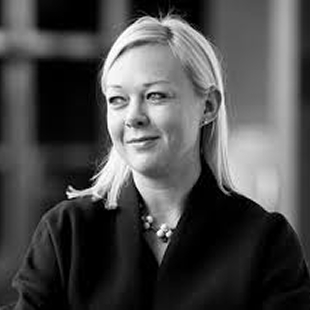
Vilma Luoma-aho

Subproject leader, Professor, Dean

JYU. JSBE

strategic communication misinformation information defence
In the AIdemoc project, I lead the JYU team focusing on threat scenarios related to AI and misinformation. I serve as JSBE’s Dean responsible for education, as a member of the Advisory Board of the Finnish National Defence University, and as chair of MATINE’s Social Sciences Division. My research on strategic communication has been published in leading journals in the field.

vilma.luoma-aho@jyu.fi

Niilo Noponen

Researcher

JYU

strategic communication misinformation algorithmic management
In the AIdemoc project, I study the relationship between technology and strategic communication, such as the weaponization of communication and individuals’ vulnerability to misinformation. I have recently completed my doctoral dissertation on the effects of management algorithms on organizations. Previously, I worked, among other roles, as a project researcher and small business owner.

niilo.v.noponen@jyu.fi

Miriam Hautala

M.Sc. (Econ.), Project Researcher and Doctoral Researcher

JSBE

strategic communication information defense and information influence
Working with the AIdemoc project, I explore vulnerabilities in digital communication, specifically focusing on AI-generated threats. My PhD dissertation looks into strategic communication in the context of information operations. Before transitioning into academia, I gained professional experience as a marketing and communications specialist.

miriam.a.hautala@jyu.fi

Sherpa

In the AIdemoc project, Sherpa is responsible for communications and engagement.

Sherpa is a Helsinki-based creative agency known, among other things, for its expertise in using generative AI in marketing communications. Its pioneering work in adopting new AI tools is already visible in the everyday work of many of Sherpa’s clients through greater efficiency, smarter use of time, and better results. Participatory, AI-boosted methods challenge traditional ways of working.
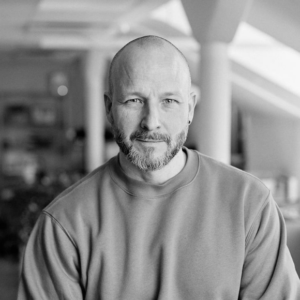
Pauli Waroma

CEO in SHERPA

SHERPA

Creativity communication generative AI
I am the project’s Director of Engagement and CEO of Sherpa.

Pauli@sherpa.fi

blogin kirjoittaja kuvassa

Terhi Walamies

Communications and engagement coordinator

SHERPA

Communications engagement
I serve as the communications and engagement coordinator in the AIdemoc project.

terhi@sherpa.fi